Mammatus Clouds
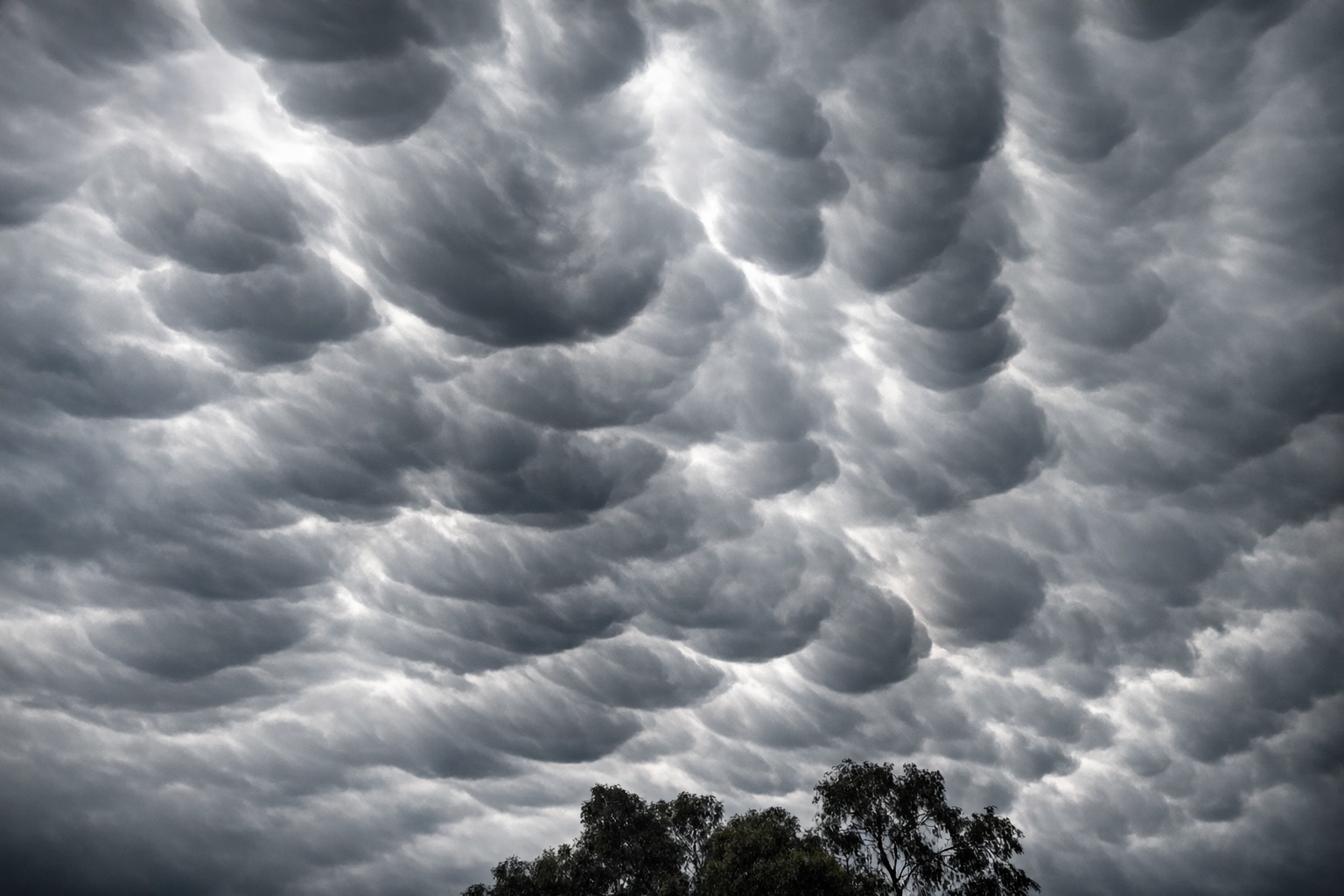 Saw these clouds when I was playing golf at Riverside Golf Club, they looked interesting, so I took a couple of photos.
Turns out they are Mammatus (also called mamma or mammatocumulus, meaning "mammary cloud") is a cellular pattern of pouches hanging underneath the base of a cloud, typically a cumulonimbus raincloud, although they may be attached to other classes of parent clouds. The name mammatus is derived from the Latin mamma (meaning "udder" or "breast").
According to the WMO International Cloud Atlas, mamma is a cloud supplementary feature rather than a genus, species or variety of cloud. The distinct "lumpy" undersides form as cold air sinks, creating pockets that contrast with the rising puffs of clouds caused by the convection of warm air. These formations were first described in 1894 by William Clement Ley.
Mammatus are most often associated with anvil clouds and also severe thunderstorms. They often extend from the base of a cumulonimbus cloud, but may also be found under altostratus, and cirrus clouds, as well as volcanic ash clouds. When occurring in cumulonimbus, mammatus are often indicative of a particularly strong storm.