Are websites doomed
Lately I’ve noticed that when I use Copilot to look something up, I often don’t bother clicking through to any website. The AI gives me the answer straight away, and that’s enough. More and more, websites feel like big storage sheds full of information that AI tools dig through and hand back to us in a neat little bundle.
I’ve since learned that about 60% of Google searches end with no click at all. People read what’s on the results page and stop there. With AI search becoming normal, that number is only going to rise.
This makes me wonder how a website should present itself today. A “look at me” style site seems less useful than it once was. What matters now is clear, simple information that an AI can understand and pass on. Fancy layouts don’t help much with that.
If anything, the cleaner and more direct the information is, the more likely it is that AI search tools will pick it up and rank it well. Taken to the extreme, you could argue that one well‑organised page might do the job better than a whole maze of pages.
I’m not sure how this plays out for online shops. It’s easy to imagine a future where the AI finds the product, compares prices, and even completes the purchase for us. Big sites like Amazon are probably blocking AI crawlers, but that might open the door for smaller shops that don’t. If their content is easy for AI to read, they might end up being the ones the search tools recommend.
Mammatus Clouds
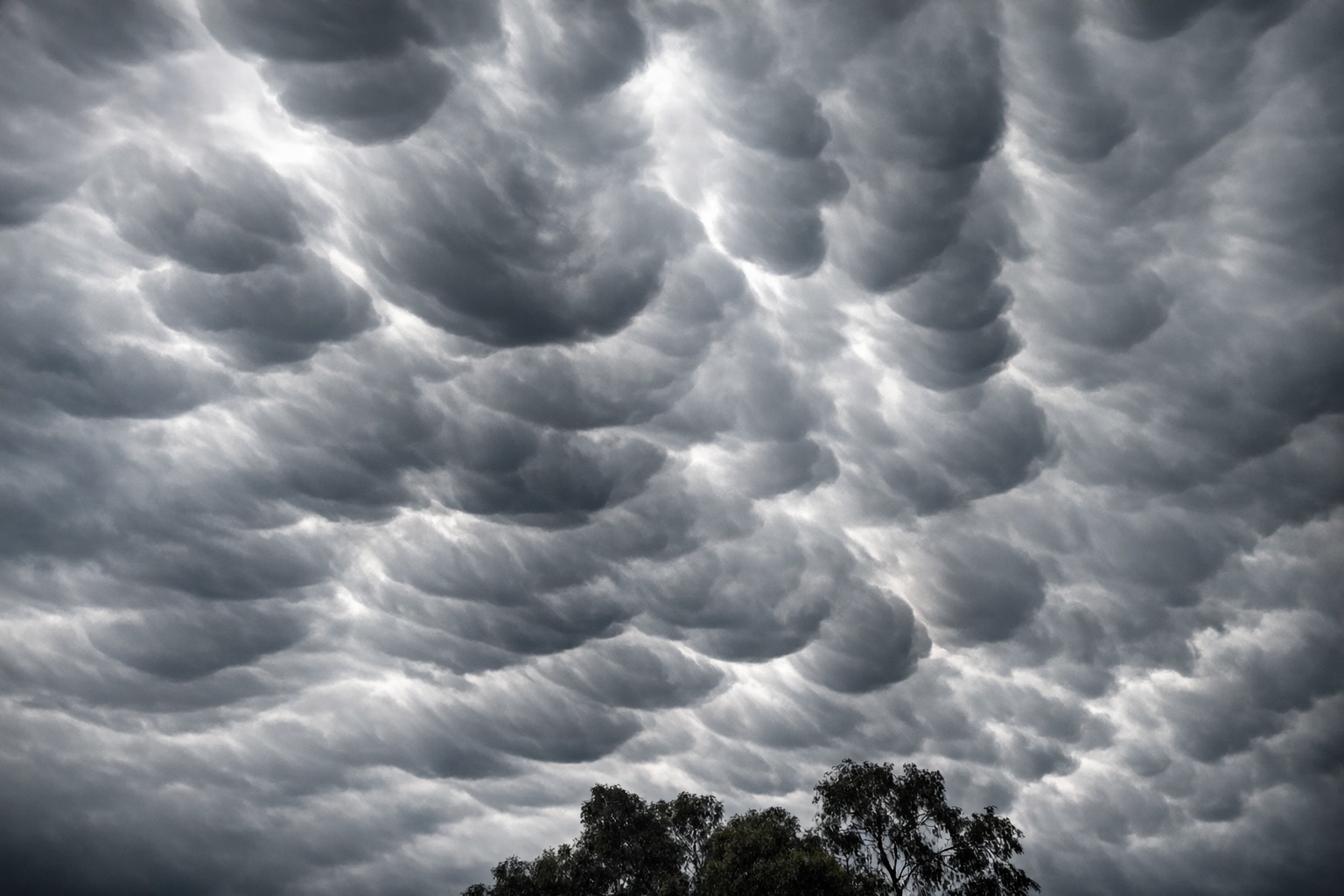 Saw these clouds when I was playing golf at Riverside Golf Club, they looked interesting, so I took a couple of photos.
Turns out they are Mammatus (also called mamma or mammatocumulus, meaning "mammary cloud") is a cellular pattern of pouches hanging underneath the base of a cloud, typically a cumulonimbus raincloud, although they may be attached to other classes of parent clouds. The name mammatus is derived from the Latin mamma (meaning "udder" or "breast").
According to the WMO International Cloud Atlas, mamma is a cloud supplementary feature rather than a genus, species or variety of cloud. The distinct "lumpy" undersides form as cold air sinks, creating pockets that contrast with the rising puffs of clouds caused by the convection of warm air. These formations were first described in 1894 by William Clement Ley.
Mammatus are most often associated with anvil clouds and also severe thunderstorms. They often extend from the base of a cumulonimbus cloud, but may also be found under altostratus, and cirrus clouds, as well as volcanic ash clouds. When occurring in cumulonimbus, mammatus are often indicative of a particularly strong storm.
Dad at the Mildura Co-operative Fruit Co. Ltd
The following is from my father (Vic Innes) memoirs. My father found me a job working with Mr. Collis Dyason at the Mildura Co-operative Fruit Co. Ltd. The Co-op as it was mostly known was a Growers Co-op with Branches at Irymple, Merbein, Curlwaa, Coomealla and Mildura. Each of these branches consisted of Dried Fruit Packing, Citrus Packing, Engineering Department, and a Goods Trading Store. The Coomealla Branch was built just after the war, and the Curlwaa Branch reduced to only a Goods Trading Store. All produce packed by the Co-op, Dried Fruit, Citrus and By Products was packed under the Trademark of “Padlock Brand”. The general manager of the Co-op when I started work there, was Mr. D.C. Winterbottom, generally known throughout the Industry as Dee Cee, but affectionately known by the workers at the Co-op as “Old Frosty Bum”. When he retired William Victor Ford became the General Manager.
There was also a section known as By Products which was Col Dyason’s biggest interest, and this is where my job was to be. By Products produced Tomato Sauce and Soup, Jams of every conceivable description, Marmalades, Cordials, Canned Fruit, Mixed Peel, Jelly Crystals, Canned Citrus Juices and Worcester Sauce. Probably its best products were Tomato Sauce, Padlock Marmalade, Cordials and Worcester Sauce. These products were manufactured from locally grown produce and probably had the potential for expansion. The Peaches, Pears and Apricots which were canned were mainly grown in the Curlwaa area, Curlwaa eventually reverted to Citrus growing. Most of the Tomatoes for the sauces and soups came from the Robinvale and Euston areas, which have now changed to grape production.
In late March of 1952, there was a real upheaval in Town Shed. Col Dyason left the Co-op. I don’t think I was ever told the reason, nor did I find out. I can only imagine what happened. Bill Ford had just taken over as General Manager, and I assume there must have been friction either with Bill Ford or the Board of Directors. Anyway, Col Dyason left and with him went the recipes and formulas of By Products. Bill Ford came to me and told me that I was to take over the running of By Products. I informed him that I was getting married on the next Saturday 5th April, and could not do so immediately. He told me to carry on with my plans, go on my Honeymoon and things would be sorted out when I got back.
When I returned to work, I had to take over the running of By Products. Col Dyason had already started preparing to set up his own manufacturing business, in opposition on the corner of 10th Street and Pine Ave. A couple of the regular employees had gone with him, including his son Jim Dyason, who had been in control of the recipes and formulas of all By Products manufacturing. Fortunately, the Foreman, Ernie Ambrose and the Cook, Norm Hahn were still with the company but did not know the recipes etc. However, somebody remembered an old Cook who had been with the Company. A quick trip to Bridgewater to see Fergie Wass, and we returned with most of the information needed. Herb Hassall who had worked at By Products for some time and had some education in Chemistry took over the preparations of formulas and recipes.